Questions to Ask Before a Hair Transplant: Your Guide to Great Results
Thinking about a hair transplant? You're not alone — most people reach this point after watching their hairline creep back or their crown thin for a year or two. Before you book anything, there are a handful of questions worth answering, because good preparation genuinely changes the result. Here's the honest version of what to …
Thinking about a hair transplant? You’re not alone — most people reach this point after watching their hairline creep back or their crown thin for a year or two. Before you book anything, there are a handful of questions worth answering, because good preparation genuinely changes the result.
Here’s the honest version of what to expect, what to do beforehand, and what the data actually supports — without the fluff.
How to prepare for a hair transplant
Preparation isn’t busywork. Patients who follow a full pre-op protocol tend to do better — careful planning around blood work, medications, smoking and alcohol all feed into how well the grafts survive. The steps below are simple, but their effect on permanent growth is real.
1. Health checks and blood work
Before any hair restoration procedure, you need a proper health assessment — blood tests and clotting factors included — to confirm your body is ready for a minor surgical procedure. This is what keeps the day safe and lowers the risk of complications. Dr. Sherif Hegazy reviews these results personally before giving the green light.
2. Nutrition and lifestyle
What you eat in the two weeks before surgery shows up in your healing. Lean into protein, vitamin C, zinc and iron, which support the follicles and speed recovery. Cut back on smoking and alcohol — ideally stop. Smoking in particular reduces blood flow to the scalp and can meaningfully lower graft survival, so the earlier you quit before surgery, the better.
3. Hair and scalp care
Wash your hair with an antibacterial shampoo in the week before surgery, and avoid harsh chemical products and direct sun for the two weeks prior. If you’re out in the sun, use sunscreen — protecting the scalp tissue improves how well the grafts settle into the recipient area.
4. Consultation and planning
This is where realistic expectations are set. Your hair is analysed under magnification and mapped digitally to decide how many grafts you need and the natural direction of growth. The donor and recipient areas are assessed carefully so the plan delivers dense, natural-looking results with no surprises later. It’s also when your recovery schedule is laid out.
5. Practical prep the day before
Small details make the day easier: wear a button-up shirt so nothing has to be pulled over your head afterwards, keep clean cotton pillow covers ready, and have any prescribed pain relief on hand. Plan light, healthy meals, and bring a loose hat or scarf to shield the area on the way home.
6. What to avoid before surgery
Stop blood thinners (such as aspirin) for at least 10 days beforehand to reduce bleeding. Avoid alcohol for 3 days and caffeine for 24 hours before the procedure, don’t dye your hair for a week prior, and get proper sleep the night before. Each of these lowers bleeding risk and helps you heal faster.
Preparation at a glance
What to do
When
Why
Medical checks & blood tests
2 weeks before
Confirm you’re fit for surgery and reduce risk
Protein- and vitamin-rich diet
2 weeks before
Strengthen follicles and speed healing
Stop smoking & alcohol
3 days–2 weeks before
Improve blood flow, lower bleeding risk
Avoid blood thinners
10 days before
Prevent bleeding during surgery
Antibacterial shampoo
1 week before
Clean the scalp, prevent infection
Consultation & planning
Well in advance
Set expectations and a tailored plan
How long does the procedure and recovery take?
The transplant itself usually takes 3 to 5 hours under local anaesthetic, depending on how many grafts are placed — so there’s no pain during the procedure. Most people return to everyday life within two to five days, with full healing taking around 15 days. Follow your aftercare closely during that window to protect graft survival.
Treating genetic hair loss with a transplant
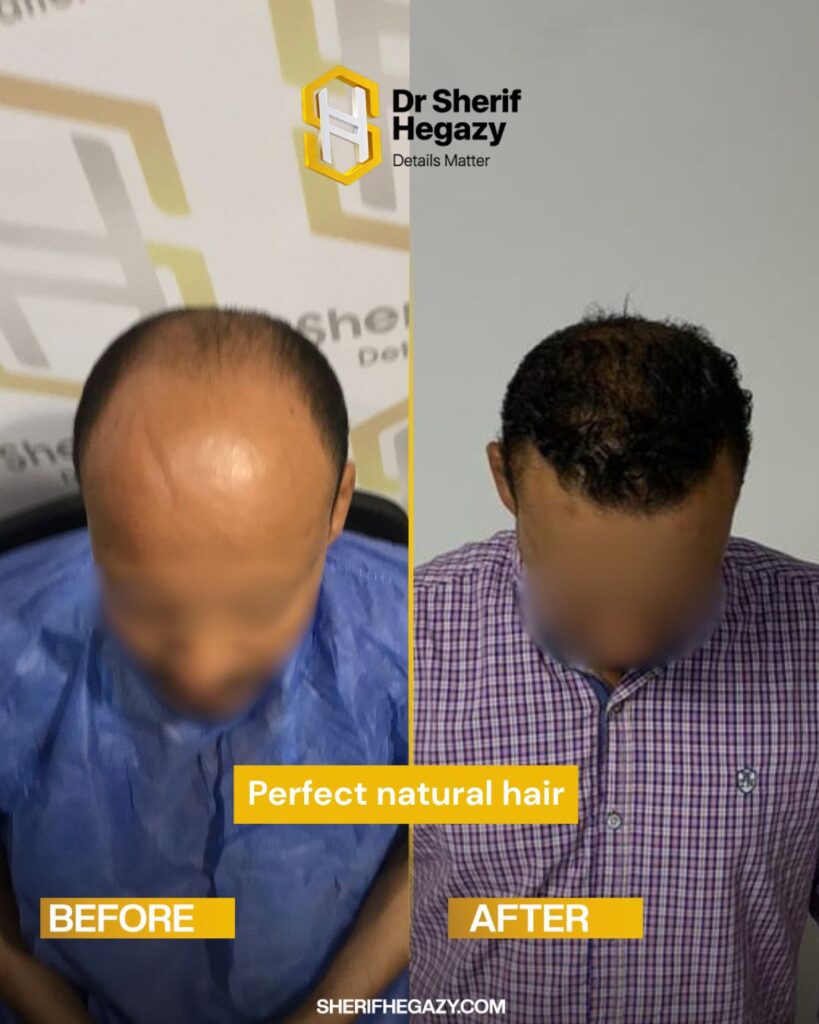
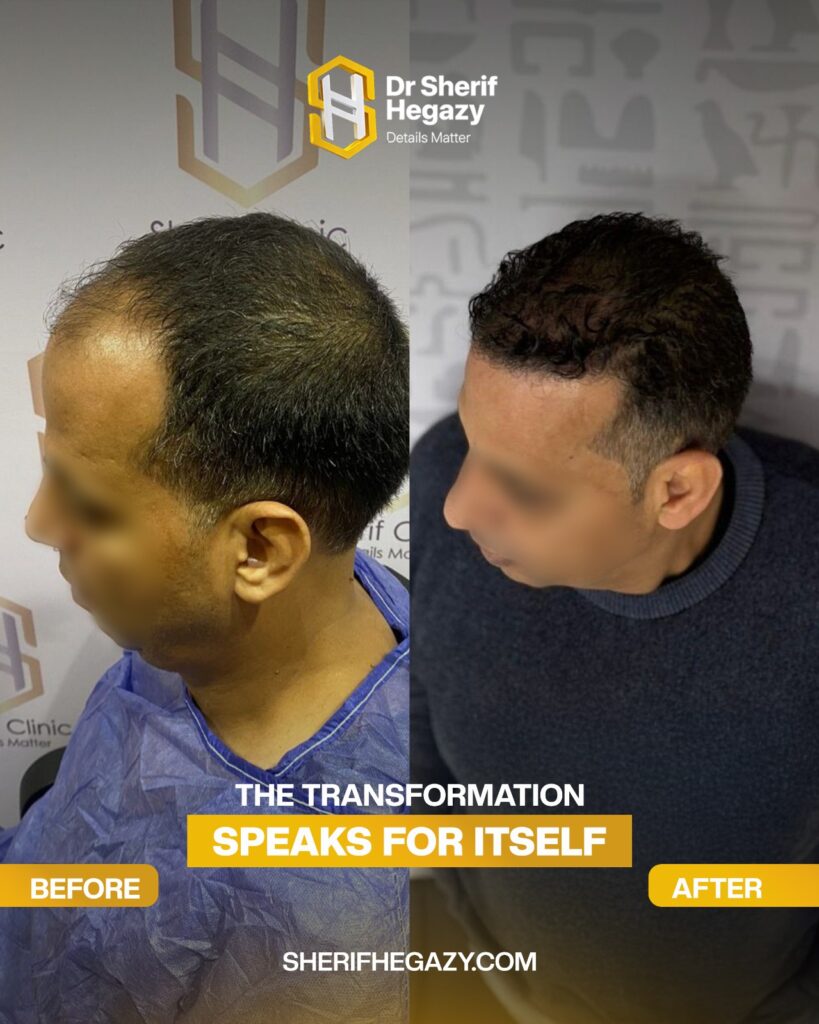
Male- and female-pattern baldness is genetic, and over-the-counter products rarely solve it on their own. A transplant offers a lasting answer: it moves loss-resistant follicles from a strong donor area into the thinning zones. Because those follicles keep their resistance to balding, the result is permanent, natural growth — done as a minor procedure under local anaesthetic in experienced hands. Learn more about our natural hair transplant.
Why choosing the right surgeon matters most
The single biggest factor in your result isn’t the device or the technique — it’s the surgeon. Experience shows in everything from planning to the angle of each graft, and that’s what separates an ordinary outcome from a natural one. With his long track record in hair restoration, Dr. Sherif Hegazy plans each case to protect your donor area for the long term, not just fill the front today.
Questions patients ask before a hair transplant
What’s the right age for a hair transplant?
Generally we prefer patients over 25, especially men, because the balding pattern has usually stabilised by then. Every case is different, though — the right timing is decided in your consultation after assessing your health and hair loss pattern.
Are the results permanent?
Yes. Transplanted follicles are resistant to pattern baldness and keep growing in their new location for life, which is what makes a transplant a long-term solution rather than a temporary fix.
How long is recovery?
Initial recovery is short — two to five days back to light activity. Visible new growth takes months, and you’ll see the final, fuller result at around a year.
Is the procedure painful?
Not during it — local anaesthetic means you won’t feel pain while it’s done. Afterwards there may be mild discomfort, which prescribed pain relief manages easily.
What tests are needed beforehand?
A set of general blood tests, including clotting factors, to confirm your overall health and that nothing will affect the procedure or graft survival.
Disclaimer: This article is for general education and does not replace a medical consultation. Suitability and results vary by individual and can only be determined through a personal assessment with a qualified surgeon.
Easily book your medical consultation and discover the right procedure for you.
Take the first step toward the change you deserve—book an appointment with us or schedule an online consultation now, and begin your journey with confidence and complete peace of mind.