Some things no amount of discipline can fix. After a major weight loss or a pregnancy, the abdominal skin is often permanently stretched and the underlying muscles are separated — and no diet, plank or crunch will repair either. A tummy tuck (abdominoplasty) is the definitive solution: it removes the excess skin, repairs the separated muscles, and restores a flat, firm midsection. In Egypt, it is available from experienced surgeons at a fraction of Gulf or Western prices.
The short answer
A tummy tuck removes loose abdominal skin and stretch marks, repairs separated abdominal muscles (diastasis), and tightens the whole area for a flat, firm result. It suits people who have finished having children and are at a stable weight, after major weight loss or pregnancy. Recovery takes four to six weeks, and the result settles over about three months.
Why diet and exercise can’t fix it
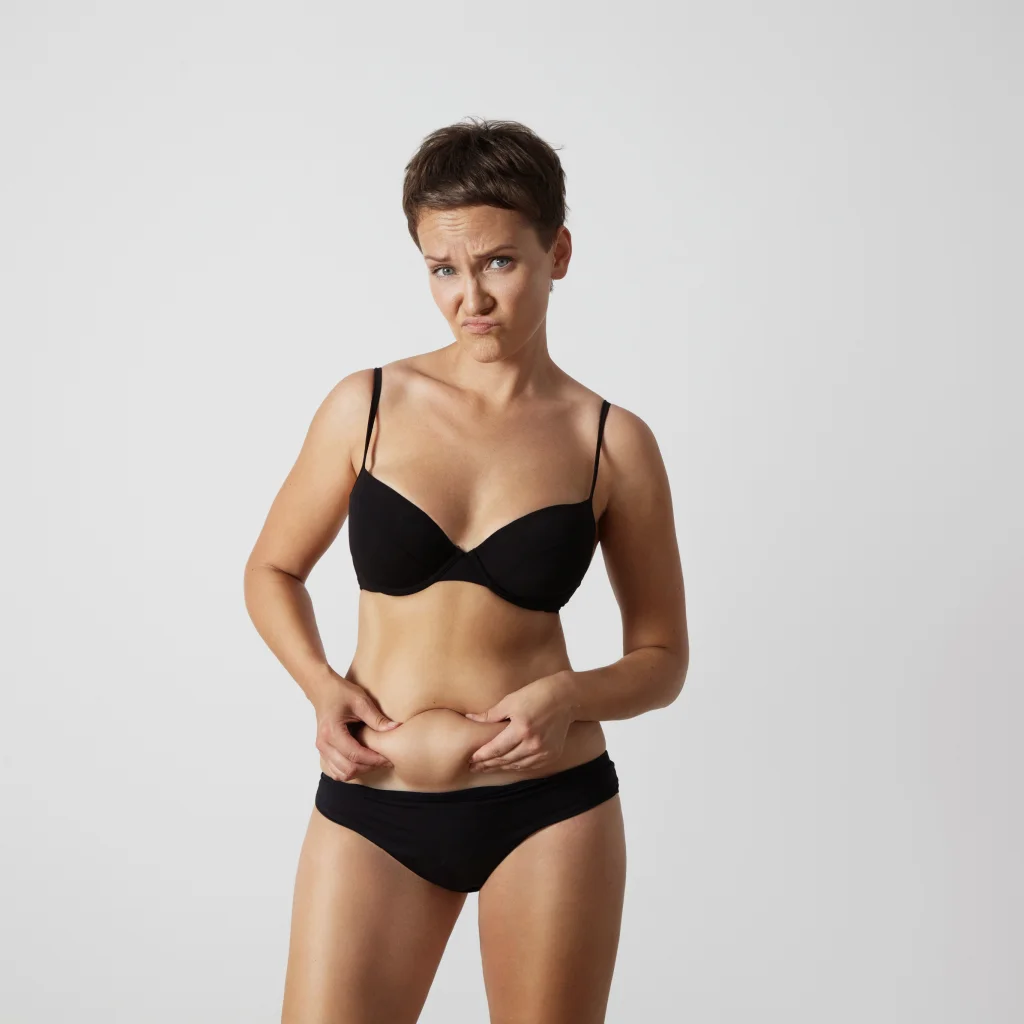
This is the point most people underestimate. Two problems follow major weight change and pregnancy, and neither responds to fitness. The first is stretched skin: once skin has been overstretched beyond its ability to retract, it stays loose no matter how much weight you lose — there is simply excess skin, and only surgery removes it. The second is muscle separation, or diastasis recti: the two vertical abdominal muscles pull apart, leaving a gap that no amount of core training can close, and that often causes a persistent belly bulge and even back strain. A tummy tuck is the only thing that addresses both — which is why so many people who have “tried everything” find it is the honest answer.
Who it suits
Good candidates have significant loose skin, stretch marks and/or muscle separation, typically after major weight loss or one or more pregnancies. Two conditions matter: you should have finished having children (a future pregnancy would undo the muscle repair), and you should be at a stable weight, since major weight change afterwards affects the result. Those who are broadly happy but have only mild laxity may be better suited to a less invasive option — see Endolift for the abdomen or J-Plasma.
The procedure and recovery
During the operation, the surgeon removes the excess skin and fat, repairs the separated muscles by stitching them back together, and tightens the remaining skin over a flat, firm abdomen. Liposuction is frequently combined to refine the waist and flanks in the same session. Recovery asks for patience: avoid strenuous activity for four to six weeks and wear a compression garment as directed. Swelling settles gradually, and the flat, defined result matures over about three months. For what to expect during healing, see recovery guidance.
Why Egypt
Egypt has become a strong-value destination for body-contouring surgery. It combines experienced consultant surgeons and modern facilities with prices well below the Gulf and the West, and a smooth medical-tourism experience for regional patients — the same combination that has made the country popular for a range of procedures. As always, choose the surgeon on experience and results, not on price alone.
Dr. Sherif Hegazy’s take: “A tummy tuck isn’t just skin — repairing the muscle separation is what gives a truly flat result, and for many patients it relieves back strain too. That muscle repair is the part a lot of people don’t realise they need.”
Frequently asked questions
Is a tummy tuck just about removing skin?
No — repairing the separated abdominal muscles is a key part of it, and often what delivers a truly flat result.
Should I wait until after having children?
Yes — a future pregnancy can undo the muscle repair, so it is best done once your family is complete.
How long is the recovery?
Avoid strenuous activity for four to six weeks; the full result settles over about three months.
Can it be combined with liposuction?
Yes — liposuction is frequently added to refine the waist and flanks in the same operation.
Ready for a flat, firm midsection?
A consultation will confirm whether a tummy tuck or a less invasive option fits you. Book a consultation with Dr. Sherif Hegazy.
General information only, not individual medical advice. Individual results vary.