Everything people fear about a hair transplant — the “pluggy” look, the obvious result, the sense that something isn’t quite right — comes down to one thing above all others: the hairline. It sits at the front and centre of the face, it’s the part everyone sees first, and it’s where the eye instantly detects anything artificial. A beautifully dense transplant behind a badly designed hairline still looks wrong; a modest transplant behind a well-designed one looks completely natural. That’s why hairline design is the true art of the procedure, decided long before a single graft is placed. This chapter completes our guide on natural transplant results by going deep on the one element that matters most.
The short answer
A natural hairline is designed — not copied from a template — to suit your face, your age and your hair. It is slightly irregular rather than a straight line, softer and finer at the very front, set at a height that respects your facial proportions, and planned with your future hair loss in mind. All of these are judgement calls the surgeon makes and draws on your scalp before surgery, which is exactly why the surgeon, not the machine, determines whether a hairline looks real.
Why the hairline is the hardest part to get right
Density in the mid-scalp or crown is relatively forgiving; the hairline is not, because it’s a transition — the place where bare forehead becomes hair. In nature that transition is soft, irregular and gradual, never a hard, uniform edge. The human eye is extraordinarily good at spotting an unnatural hairline precisely because we look at faces all day, so even small errors in shape, height or angle read as “off” instantly. Get the hairline right and the rest of the result is carried by it; get it wrong and no amount of density behind it will rescue the appearance. This is the single biggest reason a transplant lives or dies on the surgeon’s judgement rather than the technology, a theme running through our guide to choosing the best clinic.
The principles of a natural hairline
A well-designed hairline follows several principles at once, and the skill is balancing them for your individual face. It is irregular, not straight: a real hairline has tiny ups and downs and a soft, broken edge, so the surgeon deliberately avoids a ruler-straight line, which is the classic giveaway of a bad transplant. It has a soft transition zone at the very front, where fine, single-hair follicles are placed sparsely and then gradually build into fuller density behind — nature doesn’t switch from bare skin to full density in one line, and neither should a transplant. It respects an appropriate height: a hairline set too low might look impressive at thirty but ages badly and wastes precious donor hair, so it is positioned to sit in balance with the forehead and the rest of the face. It accounts for the temples and the shape of the frame, so the hairline flows naturally into the temple points rather than sitting as an isolated arch. And it is designed with facial proportion in mind — the classic idea that the face divides roughly into equal thirds guides where the hairline should sit for balance.
Designing for your age — now and in twenty years
One of the most important judgements is age-appropriateness, and it’s where inexperienced or patient-pleasing clinics go wrong. A hairline should suit not just the person in the chair today but the person they’ll be in ten and twenty years. Giving a man in his forties the low, aggressive hairline of a teenager looks unnatural immediately and worse over time — and it spends donor hair that will be badly needed later if his loss continues. A good surgeon designs a hairline that looks natural for your age and will still look natural as you get older, even if that means gently talking you out of setting it lower than you first asked. That honesty is a feature, not a limitation: it’s the difference between a result that pleases you this year and one that pleases you for life.
How the design is actually planned
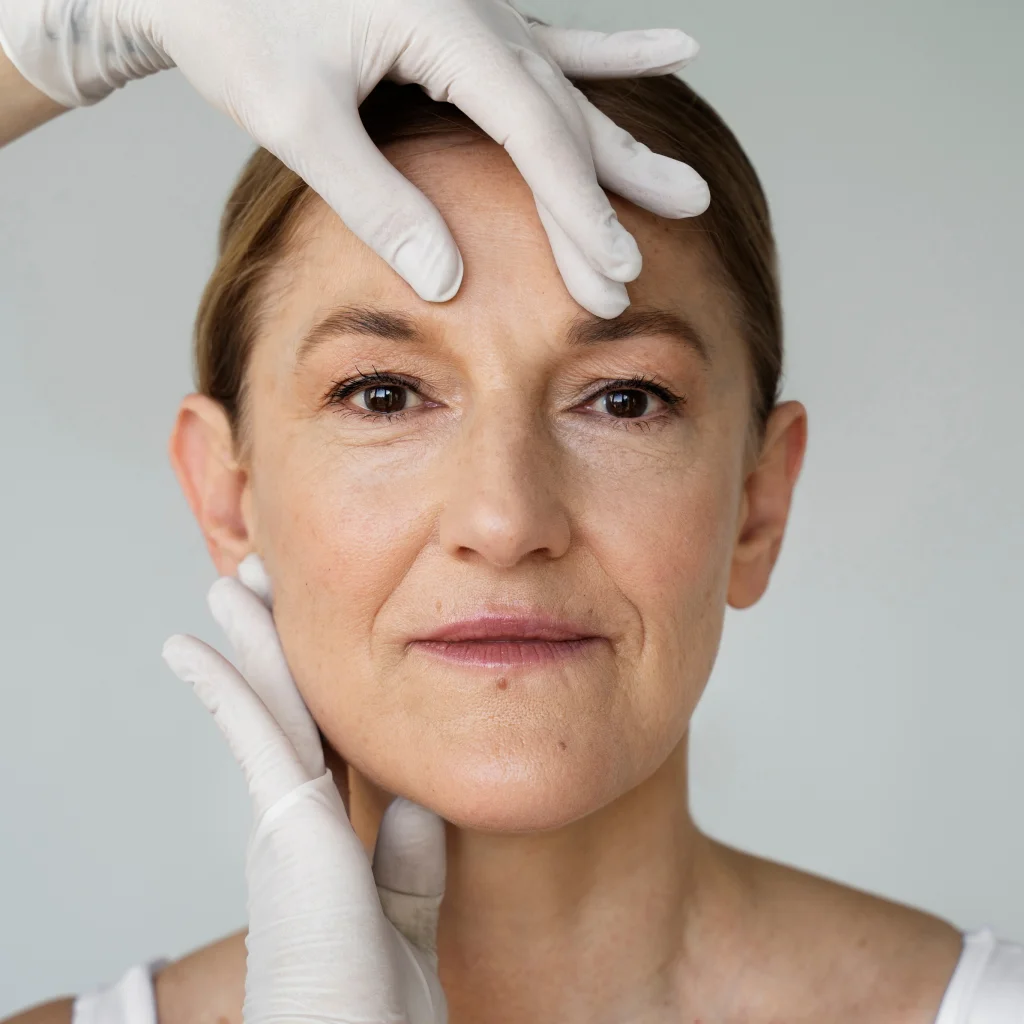
The design happens at the consultation, on your own scalp, before anything is scheduled. The surgeon studies your facial proportions, your existing hair and its characteristics — thickness, curl, colour and how it grows — and the pattern and stability of your loss. They then draw the proposed hairline directly onto your skin, shaping the irregularity, the transition zone and the temple flow, and adjust it while looking at your whole face from different angles. This is the moment to discuss it: a good surgeon shows you the plan, explains the reasoning, and agrees it with you before proceeding, rather than deciding unilaterally in theatre. Because your hair’s own characteristics matter so much — curly hair gives more apparent coverage than fine straight hair, for instance — the design is genuinely bespoke, and this is also where the plan connects to how many grafts your case will need.
The density gradient behind the front
Naturalness doesn’t stop at the front edge. Behind the transition zone, the surgeon builds density in a gradient — sparser at the very front, fuller as you move back — and places follicles at the correct angle and direction to match how your hair naturally grows and flows. Single-hair follicles are used at the front for softness, with larger follicular groups placed behind them for fullness. This layering is what makes a hairline look like it grew rather than like it was installed, and it’s meticulous, follicle-by-follicle work that no machine decides on your behalf.
Planning for the future and conserving donor hair
A responsible hairline design is also a long-term plan. Because your donor supply is finite and your genetic loss may continue, the surgeon designs the hairline and spends the grafts conservatively, keeping reserves for the areas most likely to need attention later. An over-ambitious hairline that consumes too much donor hair early can leave you stranded if you lose more behind it. This forward planning is invisible in the mirror on the day, but it’s one of the clearest markers of an experienced surgeon versus one simply giving the patient whatever they ask for. The same principle guides sensitive cases like a natural, feminine hairline for women.
Why it has to be right the first time
Hairline design is unforgiving because it’s hard to undo. A hairline set too low, too straight or with the wrong angles is difficult and sometimes impossible to fully correct — you can’t easily “un-transplant” follicles, and repair work is more complex than getting it right initially. This is precisely why you should never rush the decision or choose a clinic that treats the hairline as a formality. The design conversation is arguably the most important few minutes of the whole process, and a surgeon who takes it seriously — measuring, drawing, explaining, and occasionally pushing back — is showing you exactly the judgement you’re paying for.
What to bring to the design consultation
The hairline is agreed in a conversation, and patients who come prepared get a better one. The single most useful thing you can bring is photographs of yourself from your twenties, or earlier if you have them — they show the surgeon where your hairline actually sat before it receded, which is a far better guide than either of you guessing. Family photographs help too, because the way your father’s or grandfather’s hair aged is the closest thing available to a prediction of yours.
It also helps to think in advance about how you wear your hair and want to wear it. A hairline designed for hair worn forward is not the same as one designed for hair swept back, and a style that exposes the temples asks more of the design than one that covers them. Bring the questions you actually care about — whether you can go shorter at the sides, whether the temples will be filled, what happens if you lose more behind it — and expect to see the proposed line drawn on your skin and to be asked whether you are happy with it. If a clinic will not draw it in front of you and explain the reasoning, that is the moment to pause, not after surgery.
Where a woman’s hairline design differs
The principles are the same but the targets are not, and treating a female hairline like a male one produces an immediately wrong result. Women typically keep a rounder, lower frontal line without the deep temporal recession that is normal in an adult male hairline, so the shape being rebuilt is different from the start. Female pattern loss also tends to be diffuse thinning behind an intact front line rather than a receding edge, which means the work is often about adding density into existing hair rather than building a border from bare skin — a technically different job requiring placement between standing follicles without damaging them.
The assessment is different too. Diffuse thinning in a woman has a longer list of possible medical causes than it does in a man, and a responsible surgeon investigates those before offering surgery rather than after. For some patients the honest answer is that medical treatment, not a transplant, is what their pattern calls for — and being told that is a better outcome than an operation that was never going to deliver what they wanted.
Dr. Sherif Hegazy’s take: “The hairline is where a transplant is won or lost, and it’s decided with a pen before it’s ever done with a blade. I design it to be irregular, age-appropriate and balanced with the face — and sometimes the most valuable thing I do is talk a patient out of a hairline that would look great now and wrong in ten years.”
Frequently asked questions
What makes a hair transplant hairline look natural?
An irregular (not straight) edge, a soft single-hair transition zone at the front building to fuller density behind, an age-appropriate height, natural angles, and balance with your facial proportions — all designed for your individual face.
Why shouldn’t the hairline be set very low?
A too-low hairline looks unnatural, ages badly, and wastes finite donor hair that may be needed later if your loss continues. It’s designed to balance the face and last, not to be as low as possible.
Who designs the hairline — the surgeon or the machine?
The surgeon. Hairline design is pure judgement — shape, height, angle, density gradient — drawn on your scalp before surgery. No machine makes these decisions.
Can a bad hairline be fixed?
Repair is possible but complex, and a too-low or badly angled hairline is hard to fully correct — which is why getting the design right the first time matters so much.
Design your hairline with an expert eye
The hairline is where experience shows most. Book a consultation with Dr. Sherif Hegazy to plan yours, or explore the hair transplant service.
This article is general information, not individual medical advice. Individual results vary.