Beard transplant risks may range from minor side effects to more serious issues if post-operative recovery instructions are not followed. In the following article, you will learn about the postoperative symptoms that, if they appear in the transplanted area, should be considered mild and manageable with proper care. You will also learn about the signs that may be cause for concern. Continue reading, dear reader.
Beard Transplant Procedure
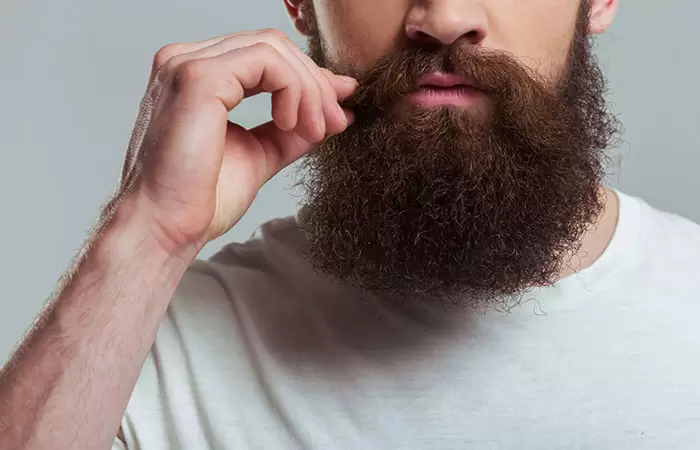
A beard or chin hair transplant is a simple cosmetic procedure in which the doctor implants hair into the beard or chin area either to increase density and enhance appearance, to fill in patchy areas caused by genetic or hereditary factors, or to conceal scars or burn marks. Follicles are harvested from any area of the body or scalp where hair closely matches beard hair in thickness, color, texture, and shape, provided the donor follicles are sufficient and stable.
Beard Transplant Risks and complications
Most beard transplant risks or “complications” are actually expected side effects that appear shortly after the procedure. Many last only a few hours or days and resolve on their own when properly managed. These include:
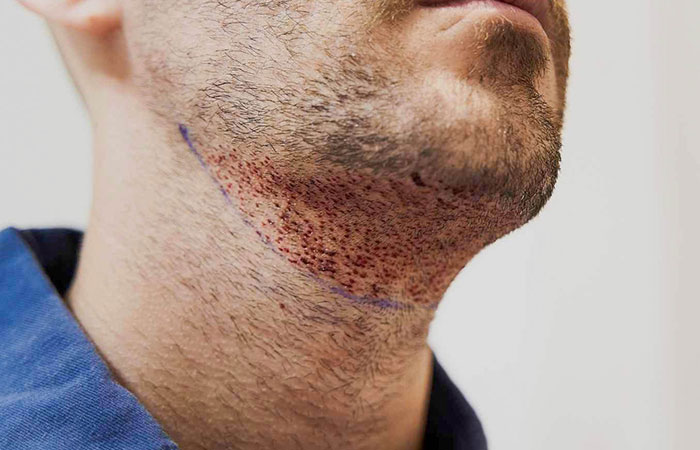
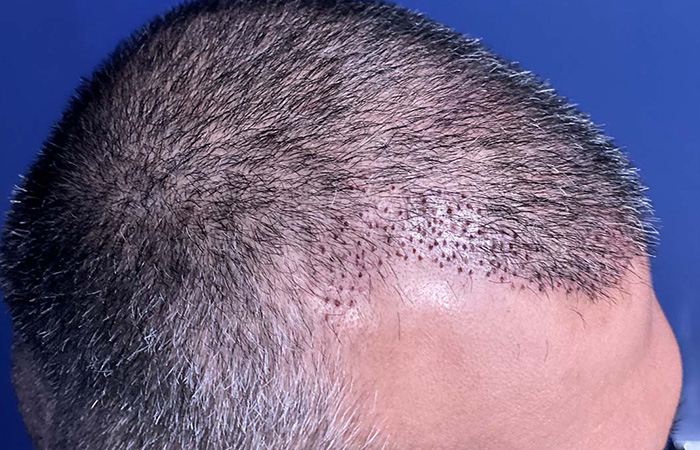
- Bleeding: One of the temporary issues that may affect appearance. It usually appears as small red spots of clotted blood, and the traces typically disappear after the first wash.
- Itching: A difficult symptom to control, creating a strong urge to scratch the transplanted area. This is one of the most important issues that must be managed correctly; scratching should be strictly avoided. Itching tends to increase as crusts form.
- Crusting: A common, non-worrisome sign that occurs due to healing of the skin and the transplanted follicles. It is a normal development during recovery and typically falls off naturally within one to two weeks.
- Facial swelling: Swelling around the face and the transplanted area may temporarily restrict daily activities or cause embarrassment when going out. It is normal and usually subsides significantly within two weeks, with minor residual swelling gradually fading over 6–8 weeks.
- Scarring: Uncommon when modern techniques are used. Scars may appear if a surgical incision is made in the donor area or due to accidental injury, infection, or poor wound healing, potentially resulting in a permanent scar. This is considered a rare complication.
When Do Beard Transplant Side Effects Resolve?
Most beard transplant side effects resolve within one to two weeks. Pain typically subsides within a week, and swelling diminishes significantly within one to two weeks. Other side effects follow a similar timeline. You can resume most daily activities after two weeks, except for activities involving heavy movement, physical strain, sun exposure, or anything that causes excessive sweating.
When Do Beard Transplant Results Appear?
Post-transplant phases begin with shedding of the transplanted hairs during the first three weeks. New hair growth usually begins after three months. Within the first 6–8 months, about 60–80% of the final results appear. Most patients see optimal results after one year to a year and a half.
Post-Transplant Instructions
To accelerate hair growth and avoid complications, the following instructions should be strictly followed:
- Avoid going out in dusty or windy weather, and start wearing a cap 10 days after the procedure.
- Avoid bending forward for at least 6–8 weeks, and sleep on your back for the first two weeks.
- Avoid alcohol and smoking for 2–3 weeks before and after the transplant, as both significantly impair healing and wound recovery.
- Crusting may trigger itching, but scratching, peeling, or forcibly removing crusts can damage or dislodge the follicles. Only moisturize the area until the crusts fall off naturally during washing.
- Itching is one of the most common post-transplant issues. Any urge to scratch can shift or damage the follicles, affecting their growth angle. Proper management includes continuous moisturizing and using anti-itch medication as advised.