Expected Hair Transplant Results: When Do They Appear and How to Keep Them?

Worried about shedding and the fear of going bald? A hair transplant can solve it — and knowing the expected results and how to protect them makes the decision easier. Here's the full timeline and how to keep your result for life. What a hair transplant does It adds hair to bald areas by taking …

Expected Hair Transplant Results: When Do They Appear and How to Keep Them?

Worried about shedding and the fear of going bald? A hair transplant can solve it — and knowing the expected results and how to protect them makes the decision easier. Here’s the full timeline and how to keep your result for life.

What a hair transplant does

It adds hair to bald areas by taking follicles from thicker regions and implanting them in thinning ones. Around 60% of men and 50% of women worldwide experience hair loss; while many turn to medication, a transplant is a lasting way to restore hair. The first transplant was performed in 1939 in Japan, and the procedure has advanced steadily since.

How it’s done

  • FUT (strip): a strip of scalp is removed, the follicles are separated and implanted through tiny channels.
  • FUE (extraction): follicles are harvested individually through micro-punches and implanted into very fine channels.

It’s done under local anaesthetic and takes about 5–8 hours depending on the technique and area size.

Recovery

  • The donor area heals within about three days.
  • Some swelling and tenderness of the scalp is normal.
  • Scabs may appear in the treated area for six to seven days.
  • Core recovery takes about seven to ten days.

When do results appear?

  • Transplanted hair sheds within two to three weeks.
  • It regrows after three to four months, then keeps growing for life.
  • Most patients see results within six to nine months.
  • Around 90% of the result shows by 10–12 months.

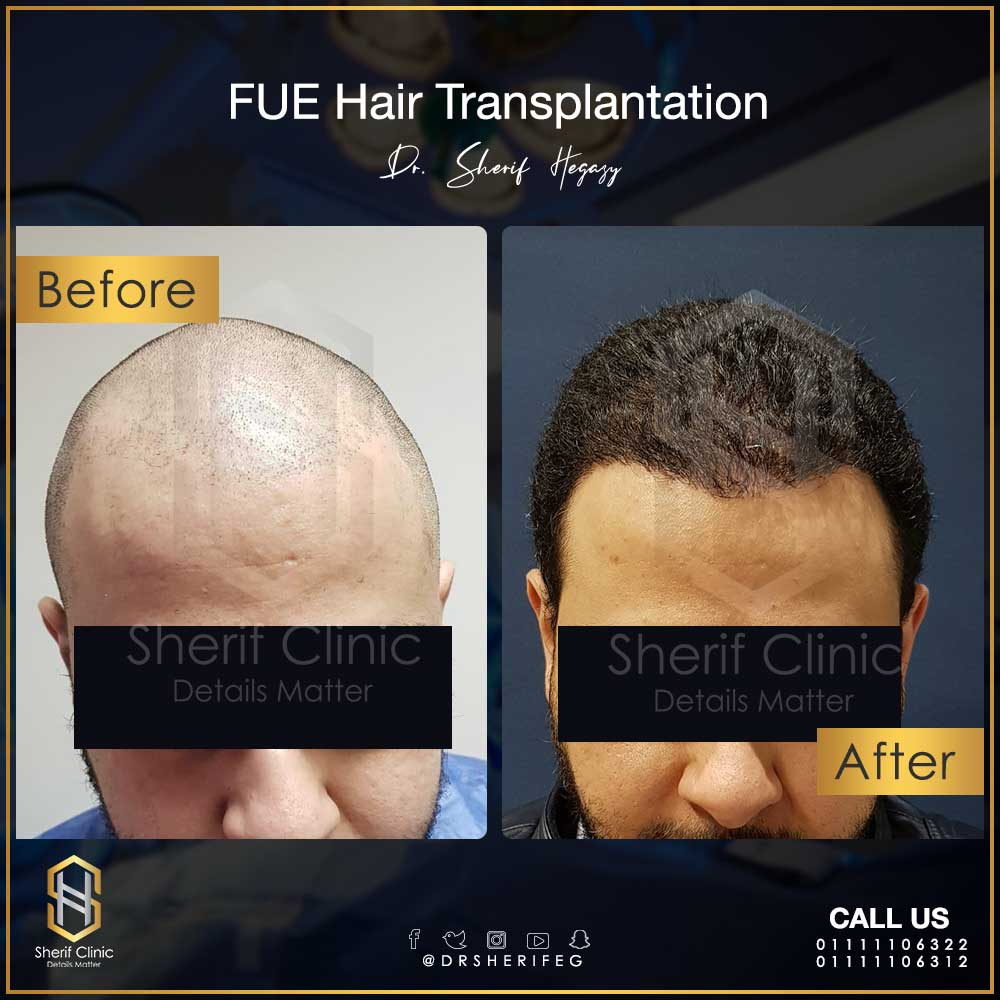
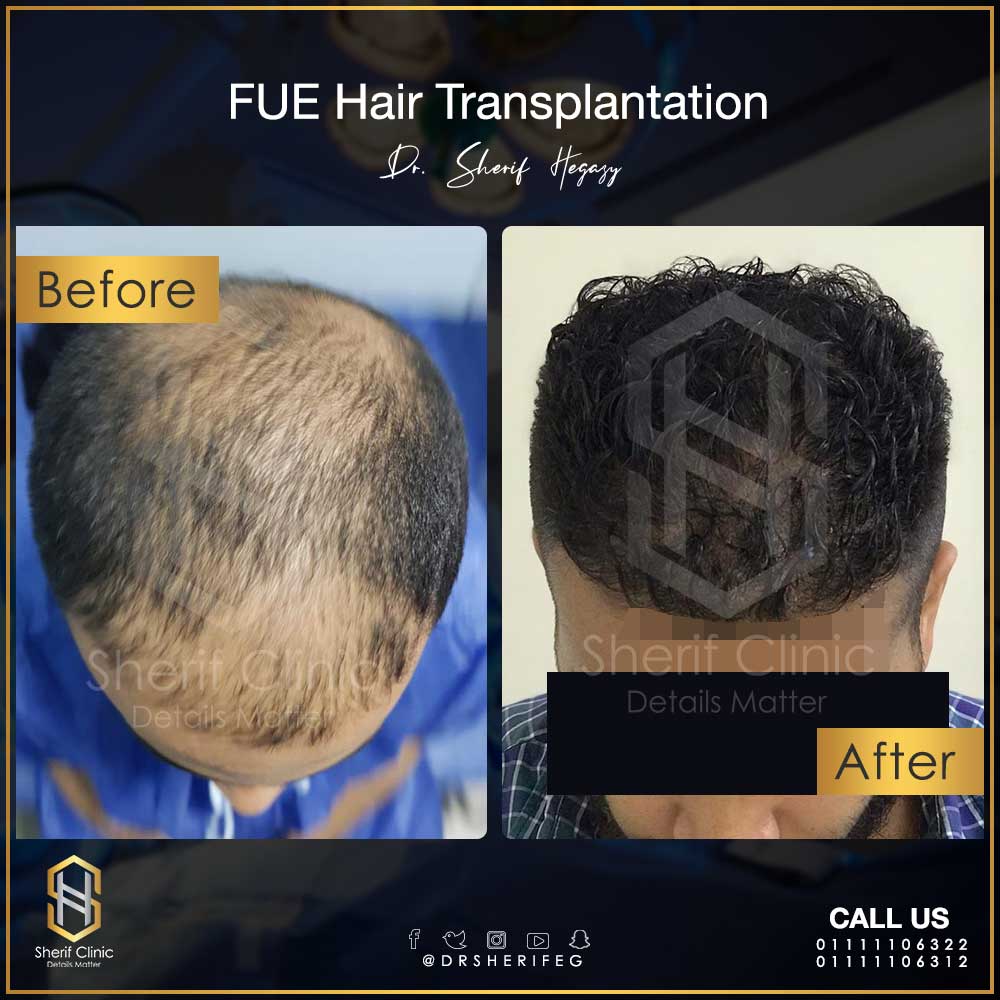
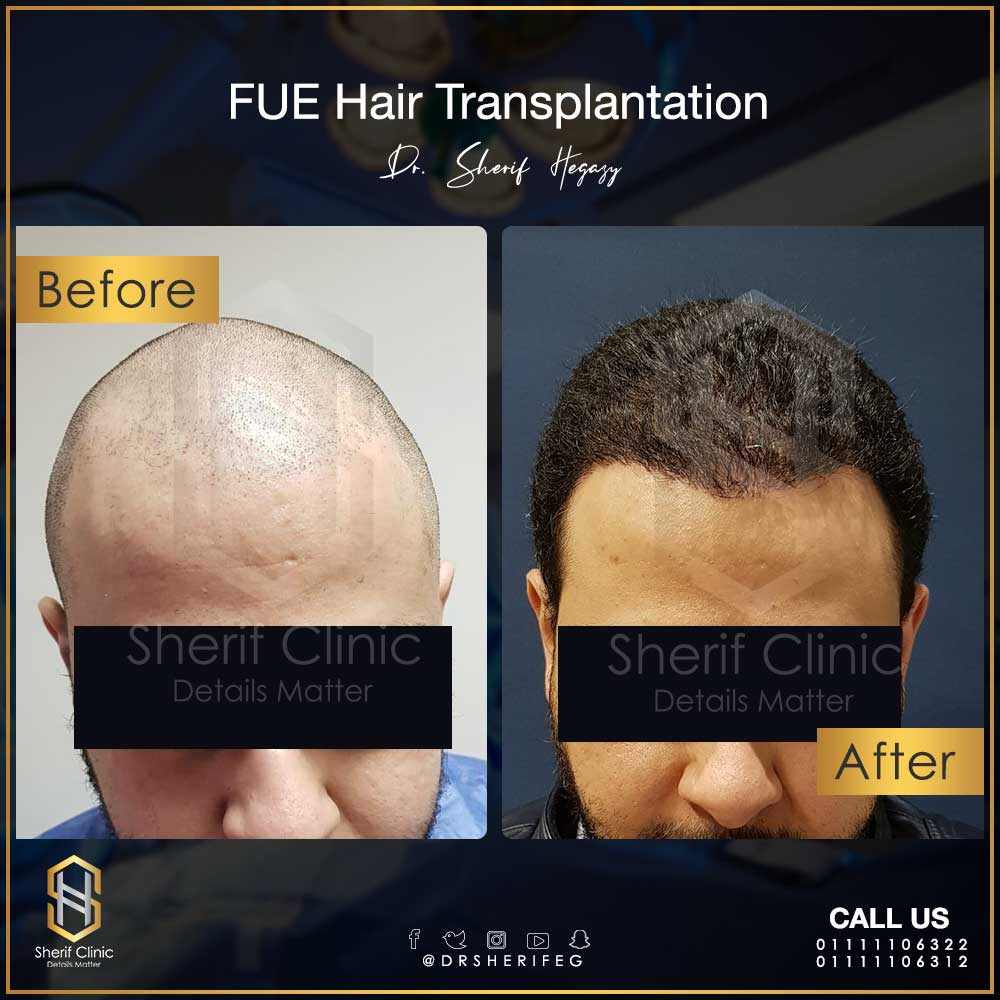
Real results at Sherif Clinic

Hair transplant before and after results at Sherif Clinic
FUE hair transplant results at Sherif Clinic

When results are most effective

  • Natural baldness or thinning.
  • Hair loss from an injury.
  • Enough healthy donor hair to harvest.
  • The ability to regrow hair in the donor area.

When results are less effective

  • Loss caused by chemotherapy or other medication.
  • Thick scarring from injuries.
  • Very widespread thinning.

How to protect your results

  • Wash gently for the first five days with a mild shampoo, without hard rubbing.
  • You can return to work after about three days and to exercise after about seven.
  • Don’t press the scalp with a brush or comb for about three weeks.
  • Avoid hats and heavy sweating until your doctor clears you.

Medications that help maintain results

Your doctor may prescribe antibiotics and anti-inflammatories for pain and swelling, plus growth-supporting options such as minoxidil (topical) and, for men, finasteride to reduce further loss.

Want to see whether you’re a good candidate? Book a consultation with Dr. Sherif Hegazy.

This article was medically reviewed by Dr. Sherif Higazy

Book an Appointment

This article was medically reviewed by Dr. Sherif Higazy

Book an Appointment

Related Posts

Easily book your medical consultation and discover the right procedure for you.

Take the first step toward the change you deserve—book an appointment with us or schedule an online consultation now, and begin your journey with confidence and complete peace of mind.

Max. file size: 3 MB.